
Waste disposal is becoming more and more difficult for contemporary cities. Rising populations cause household, corporate, and industrial trash volumes to increase as well. Bad waste management not only damages the environment but also impacts daily life and public health. Urban centres, therefore, search for more efficient, cleaner systems to manage waste. Traditional landfills cannot keep up with demand. Instead, cities spend on eco-friendly technologies, energy recovery plants, and recycling projects that lower pollution and generate new resources. Equally crucial for locals is access to appropriate disposal facilities. Choices include skip hire Wythenshawe, which offers companies and families easy solutions for proper waste management. Urban areas can develop cleaner streets, better surroundings, and sustainable futures with dependable collection and cutting-edge treatment methods. Modern waste management goes far beyond simple removal; it is about intelligent planning.
Recycling and Material Recovery Facilities
Among the most often used contemporary waste management strategies is recycling from household and industrial rubbish, material recovery facilities (MRFs) separate paper, plastic, metal, and glass. To guarantee good recycling, machinery and people sort these things. The retrieved items are then converted into fresh products. By lowering landfill utilisation and emissions of greenhouse gases, recycling also helps to cut back on raw materials and save energy. Recycling also turns garbage into useful resources when done with community engagement.
Waste-to-Energy Plants
Waste-to-Energy (WTE) facilities transform non-recyclable waste into usable energy. Waste turns into electricity or heat thanks to regulated burning or sophisticated thermal techniques. This lowers the amount of trash sent to landfills by up to 90%. Many cities use WTE facilities to feed their local power systems. When contemporary emission controls are installed, the procedure is safe. WTE is a practical means of retrieving energy from trash that cannot be recycled, even if it is not a substitute.
Anaerobic Digestion Systems
Food and organic garbage typically comprise a sizable portion of urban waste. Anaerobic digestion offers a tidy answer. Microbes decompose organic material in oxygen-free environments in this system. The process generates biogas suitable for heating, electricity, and even fuel. The leftover stuff transforms into nutrient-rich fertiliser. Anaerobic digestion helps cities to manage household, restaurant, and market food waste. It promotes renewable energy generation and lowers landfill stress.
Composting Programs
A low-cost and natural garbage disposal method is composting. Organic garbage, including food scraps, garden clippings, and leaves, is converted into rich compost. Many municipalities offer household bins for residents or sponsor community composting. Parks, gardens, and farms can all benefit from compost. Composting restores nutrients to the soil and lowers methane emissions from landfills. It helps sustainable farming and is a good approach to close the cycle on organic waste.
Smart Bin Technology
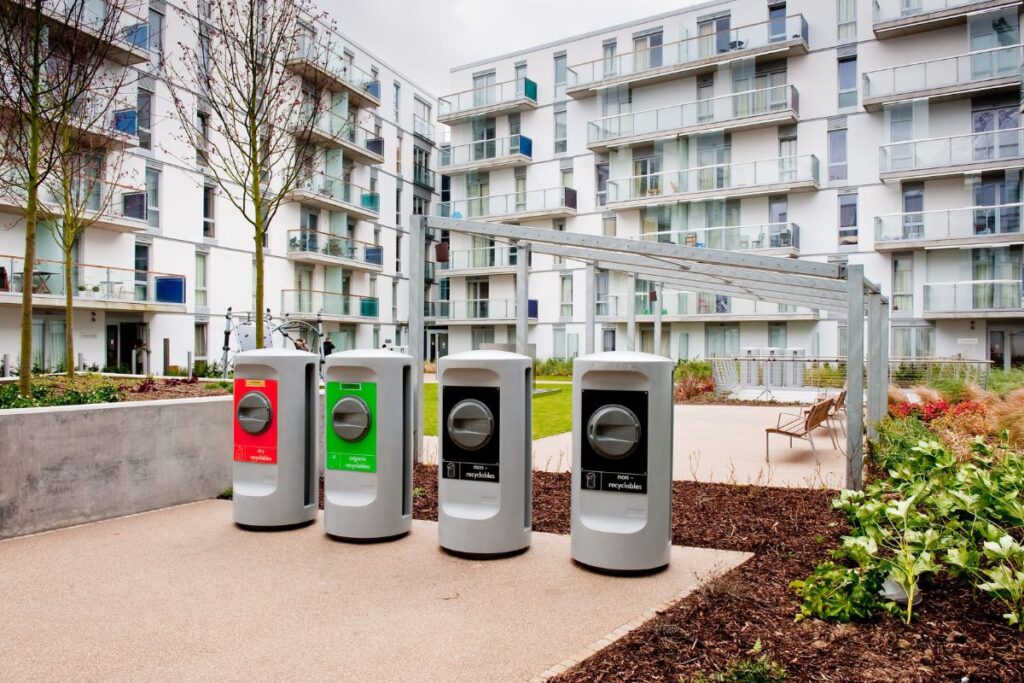
Smart bins are revolutionising urban waste collection. These bins track fill levels with sensors. When full, they notify collection teams. This helps to save gas and cuts out needless pickups. Some intelligent bins also compact waste, allowing them to hold more before pickup. Others run on solar energy. Smart use of data and technology helps. Bins enable better waste management efficiency. They also contribute to street cleanliness and lower overflowing trash issues.
Pneumatic Waste Collection Systems
Pneumatic systems provide an effective and clean solution in densely populated urban areas. Sealed inlets on buildings or streets house waste materials. The waste then passes through central facilities through underground pipes, utilising air pressure. In congested locations, this method lowers traffic, noise, emissions, and demand for trash trucks. Stockholm and Barcelona already utilise pneumatic systems. Though expensive to install, they are very useful for contemporary metropolitan planning.
Hazardous and Electronic Waste Programs
Not every piece of waste fits in conventional garbage cans. Special care must be taken with things like medical waste, batteries, chemicals, and electrical devices. Many cities now have committed programs for dangerous and e-waste. These initiatives guarantee the secure recovery of precious materials from electronics like gold, copper, and rare earth metals. Correct handling stops hazardous waste from polluting land and water. Cities lower the risks associated with hazardous garbage by raising public awareness and establishing collection sites.
Community Education and Awareness Programs
Modern waste management is at its finest when locals engage. Cities conduct awareness campaigns to educate the public on recycling, composting, and proper disposal techniques. Typically, leading these initiatives are local governments, schools, and community organisations. Little acts like segregating food waste or getting batteries correctly disposed of have a great impact. Public education raises participation in eco-friendly efforts and lowers pollution in trash cans. Waste management systems become more effective and sustainable when people grasp their part.
Conclusion:
Urban life presents particular difficulties for garbage disposal. Modern systems extend way past rudimentary dumpsites. From composting and anaerobic digestion to smart bins and pneumatic pipelines, these technologies emphasise sustainability and efficiency and are changing how cities manage trash. Additionally, covering dangerous and electronic waste is a unique initiative. Together, they offer a more environmentally friendly and responsible disposal approach. Cities can safeguard the environment and raise the quality of life by using these strategies.