
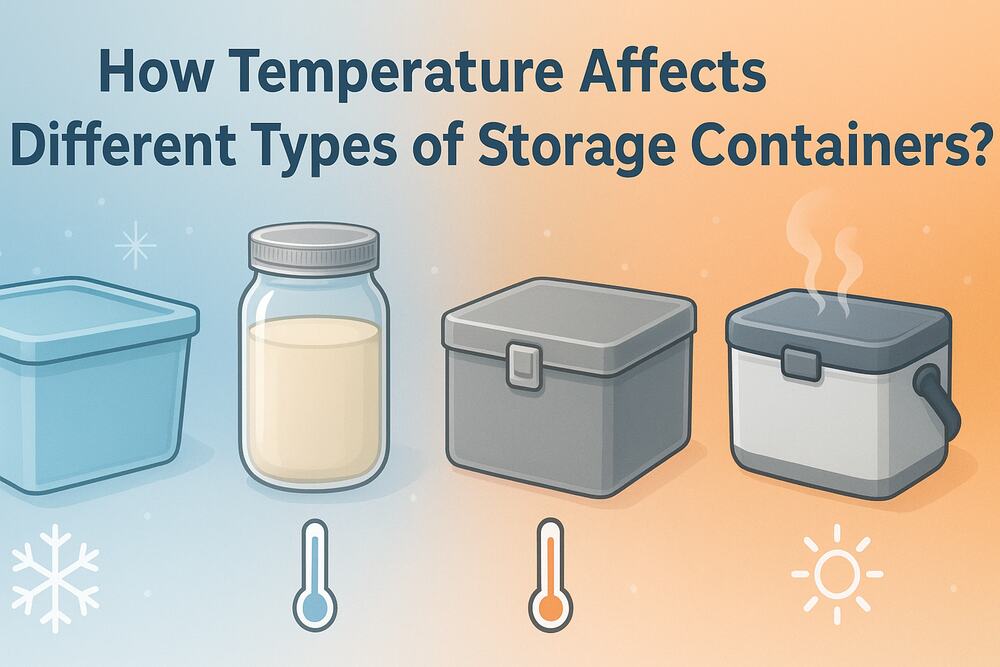
Have you ever wondered why some containers fail suddenly? Temperature can change the way storage containers behave and last.
Warm or cold conditions may damage certain materials without warning. Some containers expand while others crack under extreme temperatures. The effect depends on the type of container and usage.
Which containers handle heat and which fail fast? Can simple storage choices prevent costly accidents later?
Let us find out here in this article penned down by one of the best tin packaging manufacturers how temperature impacts various storage containers.
Plastic Containers and Heat
Plastic containers are often damaged when they are exposed to heat. They can become soft and lose their original shape quickly.
Warping is usually caused by prolonged contact with hot liquids or sunlight. Some chemicals inside the container can react when heat is applied.
Cracks may appear if the plastic is heated too strongly. The strength of the container is reduced by high temperatures.
Glass Containers and Cold
Glass containers can be easily cracked when they are exposed to cold. Sudden temperature changes are often experienced by glass and cause damage.
Shattering is usually caused when hot contents are added to cold glass. The edges of the container are weakened first by low temperatures.
Cracks may spread quickly if the glass is handled carelessly. Proper care is recommended to avoid exposing glass to extreme cold.
Metal Containers and Temperature Changes
Metal containers are affected when they are exposed to temperature changes. Expansion is often experienced by metals when heat is applied.
Contraction occurs as metal cools after being heated for long. The shape of the container can be slightly changed by these movements.
Joints and seams are sometimes weakened when repeated heating and cooling happen. Corrosion may be increased if moisture is combined with high temperatures.
Cardboard Boxes and Heat
Cardboard boxes can be weakened when they are exposed to heat. Moisture is often absorbed more quickly in warm conditions.
The strength of the box is reduced by prolonged heat exposure. Bending or collapsing is sometimes caused by softening of the cardboard layers.
Items inside the box may be damaged if support is lost. Proper storage is recommended to avoid placing boxes near heat sources.
Wooden Containers and Temperature
Wooden containers are often affected when they are exposed to temperature. Swelling is usually caused by moisture in warm conditions.
Shrinking can occur when the wood is kept in cold areas. Cracks may appear if the wood is dried too quickly.
The strength of the container is sometimes reduced by repeated changes. Joints and corners are often weakened by expansion and contraction.
Proper care is recommended to keep wooden containers stable. Damage can be minimized by storing wood in controlled conditions.
Silicone Containers and Heat
Silicone containers are generally protected when they are exposed to heat. Flexibility is usually maintained even under high temperature conditions.
Deformation is rarely caused because the material resists melting or warping. Heat resistance is increased when high-quality silicone is used in production.
Strong odors or stains are sometimes prevented by proper cleaning before heating. Containers are often preferred for cooking or storing hot items safely.
Plastics in Freezing Temperatures
Plastics are often damaged when they are exposed to freezing. Brittleness is usually caused by very low temperatures over time.
Cracks can appear if the material becomes too rigid and fragile. Some containers are tested, but breakage may still occur unexpectedly.
Items inside may be affected when containers are broken by cold. Careful handling is recommended to avoid sudden impacts on frozen plastics.
Lids and High Temperatures
Lids are often affected when they are exposed to high temperatures. Seals can be weakened by prolonged contact with heat.
Warping is usually caused when lids are exposed to hot liquids. Proper closure may be lost if the lid shape is changed.
Leakage is sometimes caused when tin containers for food packaging are not sealed tightly. Care should be taken to avoid placing lids near direct heat.
FAQS
What happens to plastic containers in high heat?
Plastic can melt or change shape if it gets too hot. Some plastics may also release chemicals.
Can glass containers break in the freezer?
Yes. Glass can crack or shatter if it freezes quickly or has liquid inside.
Do metal containers get damaged in the heat?
Metal can get very hot and may warp, but it usually doesn’t break.
Are silicone containers safe in hot and cold temperatures?
Yes. Silicone is flexible and can handle both heat and cold without breaking.
Can temperature change the taste of food in containers?
Yes. Plastic may sometimes affect taste if it’s very hot, while glass and metal usually do not.