
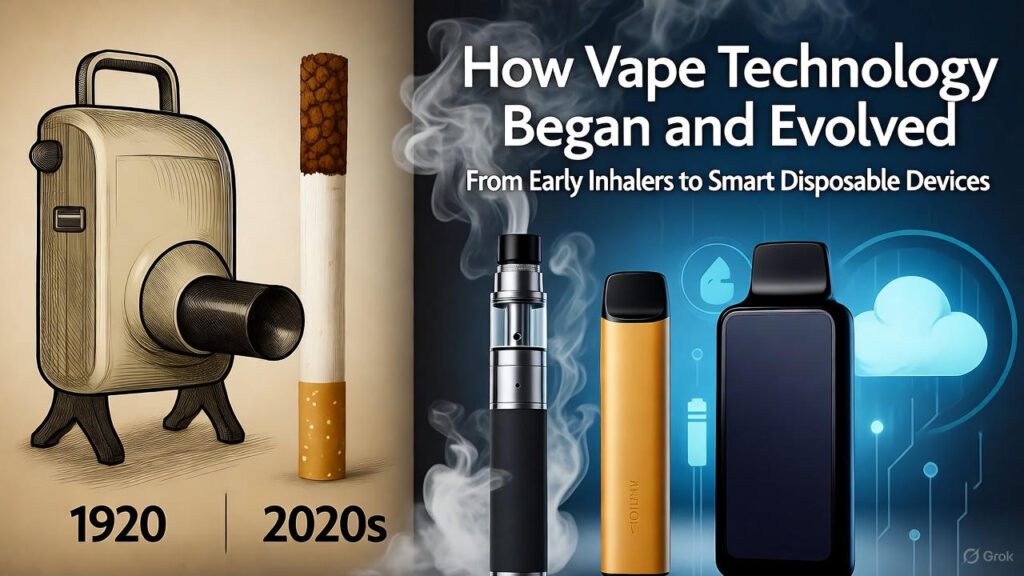
The vape technology is an alternative to tobacco smoking. The current equipment warms a liquid to produce an aerosol, which is inhaled. The modification eliminates combustible smoke. There are a lot of shapes and sizes of devices. Also, there are those devices that are used by plugging into a cartridge and others are used as single-use devices. So, the industry is expanding at a rapid rate as increasing numbers of people seek alternative options.
Today, I will take you through the history of vape technology. Let’s start!
Vape Market Overview – Size, Trends & Demographics
Vaping is expanding all over the world. The sales are growing through online stores, convenience stores, and specialty stores. Many product trends are being made by young adults. New buyers are lured by flavors and small sizes. The manufacturers of devices compete based on battery life, convenience, and cost.
History of vapes — origin and inventors
- 1920s–1930s: Early patents show basic concepts for smokeless inhalers. These ideas remain experimental and never reach the market.
- 1960s: Herbert A. Gilbert designs a device that heats flavored air instead of burning tobacco. It is an important concept, but technology at the time limited production.
- 1980s–1990s: Several inventors filed patents for electronic vaporizers. None of these became popular, but they keep the idea alive.
- Early 2000s: A Chinese pharmacist develops the first practical electronic cigarette. He patents the design and introduces it to the market.
- Mid-2000s: Modern e-cigarettes gain attention globally. When vapes were invented, it became a clear point in history during this period.
- Late 2000s: Vape pens appear as a slimmer and more portable version of earlier devices. This answers when vape pens were invented and marks a turning point for users who prefer simple designs.
- 2010s: Disposable vapes enter the market. People often ask who invented disposable vapes, and while many companies innovate, the format spreads quickly due to convenience.
- 2020s: Vaping technology improves with better batteries, safer ingredients, and more compact designs. The industry grows worldwide, and regulations begin to shape how products reach consumers.
Starting a Vape Business: Steps and Strategies
You select a definite niche, and you spend money. Determine whether you will be selling device pods or disposable vapes. Get the suppliers who are credible and sample products. Register the business and open tax accounts. Create a website that checks the age of the buyer during checkout. Provide instructions and clean containers to store away.
Consider working with packaging suppliers and look into custom vape boxes wholesale for a consistent branded presentation. You plan logistics and stock levels to avoid shortages. You train staff to verify age and to respond to customer questions about safety.
Business Tips
- Focus on clear, honest pricing.
- Offer bundles to encourage trial purchases.
- Use social platforms.
- Build trust.
- Track supplier lead times and maintain buffer stock.
- Test new products with small orders.
- Keep profit margins sensible.
Summary
The technology of vaping is not a recent innovation, but it is becoming a fully developed market with numerous device models. It is the road of early inventors who do useful product design and market development at a rapid pace. New products in the market are refillable system pods and numerous single-use disposables. Quality and compliance should be put first. You should come up with packaging to cushion users and that complies with regulations.
Also, you have to train personnel and check the age of buyers. You need to monitor supply chains and keep definitive prices. When you are looking to enter this industry, you should begin with small tests frequently and maintain a compliance file on each product. In case you need assistance with the product pages, packaging, or compliance, I can give you instructions on what to do now.